
I Built a Location-Based Ramadan Time Web App
A detailed case study of how I built a Next.js-based Ramadan Time web app with automatic location detection, Sehri & Iftar timing, live countdown, and GitHub deployment — including technical challenges and engineering decisions.
- Client
- Own
- Type
- Web Application
- Timeline
- 2 Days
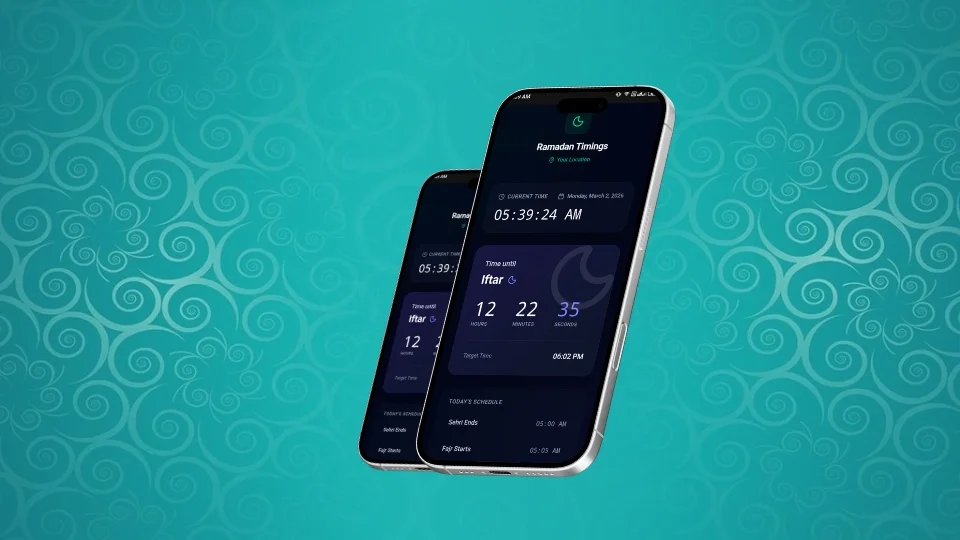
The Idea
Every Ramadan, the same question repeats:
“How much time is left for Iftar?”
“What’s today’s Sehri time for my area?”
Apps exist. Websites exist. But most felt heavy, ad-filled, or not properly location-optimized.
So I asked myself:
What if I build a clean, fast, location-based Ramadan Time web app using Next.js — focused only on what matters?
That’s how this project started. Project live link.
The Vision
I wanted to build something that:
- Detects user location automatically
- Shows accurate Sehri & Iftar times
- Displays a live countdown timer
- Works fast on mobile
- Is minimal, distraction-free
- Can scale globally
And of course — built with modern frontend architecture.
⚙️ Tech Stack
- Framework: Next.js
- Language: TypeScript
- Styling: Tailwind CSS
- Location Handling: Browser Geolocation API
- Prayer Time Data: External Islamic prayer time API
- Deployment: Netlify
- Version Control: GitHub
Repository available on GitHub.
🧠 Core Features
1️⃣ Automatic Location Detection
I implemented the Browser Geolocation API to detect the user’s latitude and longitude.
navigator.geolocation.getCurrentPosition()
But here’s the catch.
It doesn’t always work.
Users can:
- Deny permission
- Use VPN
- Use unsupported browsers
- Have location disabled
So I built a fallback system:
- If geolocation fails → user manually selects city
- Stored preference in localStorage
- Prevent unnecessary repeated permission prompts
That small UX decision changed everything.
2️⃣ Location-Based Ramadan Time Fetching
Once I had:
- Latitude
- Longitude
I dynamically fetched prayer times from a prayer time API using query parameters:
/timings?latitude=XX&longitude=YY&method=2
Challenges faced:
- Different calculation methods give slightly different times
- API rate limits
- Timezone mismatches
- Formatting 24h to 12h conversion
I implemented:
- Timezone correction using Intl API
- Caching response in localStorage for performance
- Refetch only when date changes
3️⃣ Live Countdown Logic
This was the most interesting part. I built a dynamic countdown that:
- Detects current time
- Compares with today’s Iftar time
- If Iftar passed → switches to next Sehri countdown
Core logic:
- Convert prayer time string into Date object
- Compare with new Date()
- Calculate time difference in milliseconds
- Update every second using setInterval
Edge cases I handled:
- Midnight crossover
- Date change after 12 AM
- Negative time differences
- Daylight Saving issues (for international users)
The logic wasn’t complex. But making it reliable was.
🚧 Challenges I Faced
🔹 Auto Location Accuracy
Some devices returned imprecise coordinates. Solution: Reverse geocoding to show city name and verify.
🔹 Hydration Issues in Next.js
Since location & time are client-side dependent, I faced hydration mismatch warnings.
Solution:
- Wrapped time-dependent components inside useEffect
- Conditional rendering after mount
- Used dynamic imports where necessary
This improved stability significantly.
🔹 API Reliability
Free prayer time APIs sometimes:
- Timeout
- Rate limit
- Return inconsistent format
So I:
- Implemented try/catch error handling
- Added loading skeleton UI
- Created fallback UI for failure state
🔹 Performance Optimization
To keep it fast:
- Used server-side rendering only where necessary
- Client-side rendering for dynamic time updates
- Minimized unnecessary re-renders
- Memoized components
Lighthouse score improved significantly after refactoring.
🎨 UI/UX Philosophy
I intentionally kept the design:
- Dark-themed (night-friendly)
- Large countdown digits
- Minimal distractions
- Mobile-first layout
Ramadan is about focus. The app reflects that.
📂 GitHub & Deployment
The project is publicly available on GitHub. What it demonstrates:
- Clean folder structure
- Component-based architecture
- Environment variable management
- Proper commit hygiene
- Scalable frontend setup
Deployed via Vercel with automatic CI/CD on push.
💡 What This Project Really Taught Me
Building a Ramadan timer isn’t hard. But building a reliable, real-world, location-aware application?
That’s engineering.
This project improved my understanding of:
- Time-based logic systems
- Edge case handling
- Location-based personalization
- Client vs Server rendering in Next.js
- API resilience
And most importantly, It reminded me that even simple tools can teach deep lessons if you build them properly.
🚀 What’s Next?
Planned upgrades:
- Multi-language support
- Hijri date integration
- Offline mode (PWA)
- Ramadan calendar view
- Notification system before Iftar
If you want to explore the codebase, feel free to check it on GitHub.
Because for me —
Projects are not just features. They are proof of thinking.